German epistemologists
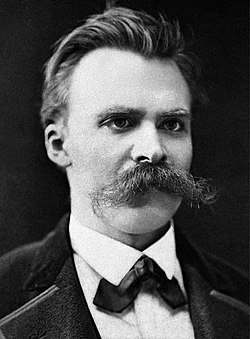
Friedrich Wilhelm Nietzsche (15 October 1844 – 25 August 1900) was a German classical scholar, philosopher, and critic of culture, who became one of the most influential of all modern thinkers. He began his career as a classical philologist before turning to philosophy.
3 episodes


Episodes in this category also belong to the following categories:
Kant's Copernican Revolution
Melvyn Bragg and guests discuss Kant's ideas on how the world depends on us, on the limits of human knowledge and why we are bound to ask questions we cannot answer.
3 June 2021
Featuring: Fiona Hughes, Anil Gomes, John Callanan
Philosophy18th-century German male writersGerman logicians, Kantian philosophers19th-century German non-fiction writersHumor researchersGerman LutheransPhilosophers of sexualityWriters about religion and scienceGerman nationalistsMetaphilosophersGerman philosophers of historyGerman male non-fiction writers19th-century Prussian peoplePhilosophers of logicGerman idealistsGerman agnostics18th-century philosophersNatural philosophersWriters about activism and social changeMembers of the Prussian Academy of SciencesPhilosophy writers18th-century German writersGerman political philosophersKantianismPhilosophers of lawGerman philosophers of culture18th-century German philosophers, 18th-century essayistsLecturersGerman ethicists, German philosophers of educationGerman philosophers of science19th-century German philosophersTheoretical historiansTheorists on Western civilizationRationalistsGerman philosophers of mind, German philosophers of religionGerman epistemologistsLogiciansIdealistsPhilosophers of social science19th-century German essayists19th-century German male writersGerman male essayistsEnlightenment philosophersOntologistsNatural law ethicistsPhilosophers of warPeople of the Age of EnlightenmentAge of EnlightenmentPhilosophers of literatureGerman philosophers of art18th century19th centuryGermanyNietzsche's Genealogy of Morality
Melvyn Bragg and guests discuss Nietzsche's influential ideas about what it means to be moral.
12 January 2017
Featuring: Stephen Mulhall, Fiona Hughes, Keith Ansell-Pearson
PhilosophyCritics of the Catholic Church19th-century German male musicians19th-century German journalistsPhilosophers of timeUniversity of Bonn alumni19th-century German non-fiction writersPhilosophers of sexualityWriters about religion and scienceMetaphilosophersGerman philosophers of historyGerman male non-fiction writersCritics of work and the work ethicGerman critics of Christianity19th-century Prussian peopleGerman music criticsWriters about activism and social changeStateless peoplePhilosophy writersIrony theoristsDeterministsPhilosophers of psychology19th-century German novelistsPeople from the Province of SaxonyCritics of religionsCritical theoristsAnti-consumeristsMetaphysiciansGerman philosophers of culturePeople associated with the University of BaselGerman military personnel of the Franco-Prussian WarGerman ethicists, German philosophers of education19th-century German philosophersTheorists on Western civilizationDeaths from pneumonia in GermanyGerman philosophers of mind, German philosophers of religionGerman epistemologistsPhilosophers of nihilismLeipzig University alumniPhilosophers of social science19th-century German male writersGerman male essayistsOntologistsAphoristsExistentialistsAnti-nationalistsPhilosophers of literatureGerman philosophers of art19th centuryGermanyMedicineMusicPsychologyWarSchopenhauer
Melvyn Bragg and guests discuss the pessimistic philosophy of Arthur Schopenhauer and his extraordinary influence.
29 October 2009
Featuring: A. C. Grayling, Beatrice Han-Pile, Christopher Janaway
PhilosophyGerman writers on atheismGerman logicians, Kantian philosophersUniversity of Göttingen alumniGerman philosophers of languageGerman philologistsMetaphilosophersPhilosophers of loveGerman philosophers of historyGerman male non-fiction writersPhilosophers of pessimismPhilosophers of logicGerman critics of ChristianityGerman idealistsSimple living advocatesAcademic staff of the Humboldt University of Berlin19th-century atheistsPhilosophy writersGerman political philosophersPhilosophers of psychologyCritics of religionsCritical theoristsGerman eugenicistsGerman philosophers of culture19th-century German writersAnti-natalistsGerman monarchistsGerman ethicists, German philosophers of educationGerman philosophers of science19th-century German philosophersTheorists on Western civilizationGerman philosophers of mind, German philosophers of religionCritics of JudaismGerman epistemologistsLogiciansAtheist philosophers19th-century German essayists19th-century German male writersGerman male essayistsOntologistsPhenomenologistsAphoristsPhilosophers of literatureGerman philosophers of art19th centuryGermanyLanguagePsychology