Fabulists
Fable is a literary genre: a succinct fictional story, in prose or verse, that features animals, legendary creatures, plants, inanimate objects, or forces of nature that are anthropomorphized, and that illustrates or leads to a particular moral lesson (a "moral"), which may at the end be added explicitly as a concise maxim or saying. A fable differs from a parable in that the latter excludes animals, plants, inanimate objects, and forces of nature as actors that assume speech or other powers of humankind.
4 episodes


Episodes in this category also belong to the following categories:
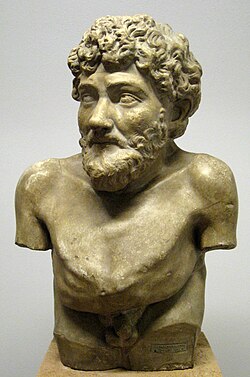
Aesop
Melvyn Bragg and guests discuss Aesop, legendary author of the famous collection of fables.
20 November 2014
Featuring: Pavlos Avlamis, Lucy Grig, Simon Goldhill
Goethe
Melvyn Bragg discusses the great German polymath Johann Wolfgang Goethe - novelist, dramatist, poet, humanist, scientist and philosopher.
6 April 2006
Featuring: Tim Blanning, Sarah Colvin, W. Daniel Wilson
18th-century German male writersMembers of the Bavarian Academy of Sciences19th-century German non-fiction writersGerman philosophers of language19th-century travel writersMembers of the Göttingen Academy of Sciences and HumanitiesPhilosophers of sexualityLiteracy and society theoristsGerman autobiographersGerman philosophers of historyGerman male non-fiction writersEpigrammatistsJohann Wolfgang von Goethe, Sturm und DrangEpic poetsPhilosophers of linguistics18th-century German civil servants, 18th-century German dramatists and playwrights, 18th-century German historians, 18th-century German novelists, 18th-century German poets, 18th-century travel writers, 19th-century German civil servants, 19th-century German diplomats, 19th-century German dramatists and playwrights, 19th-century German poets, German bibliophiles, German diplomats, German male novelists, People from Weimar, Scientists from Weimar, Writers from Frankfurt, Writers from WeimarGerman untitled nobilityNatural philosophersWriters about activism and social changeRomantic poetsGerman travel writersGerman librariansPhilosophy writersGerman political philosophersFabulists19th-century German novelistsGerman FreemasonsColor scientistsGerman philosophers of culture18th-century German philosophers, 18th-century essayistsFreethought writersGerman philosophers of science19th-century German philosophersGerman ethicists, German philosophers of educationTheorists on Western civilizationLiterary theoristsUniversity of Strasbourg alumniLeipzig University alumni19th-century German historiansGerman male dramatists and playwrights, German male poetsPhilosophers of social science19th-century German essayists19th-century German male writersGerman male essayistsEnlightenment philosophers18th-century German educators, 18th-century historians, 19th-century German educators, 19th-century historiansPantheistsPhilosophers of literatureGerman philosophers of art18th century19th centuryGermanyLanguageGoethe and the Science of the Enlightenment
Melvyn Bragg assesses the scientific legacy of the 18th century German poet and thinker Goethe, who gave us the term morphology and is sometimes even credited with inventing biology itself.
10 February 2000
Featuring: Nicholas Boyle, Simon Schaffer
Science18th-century German male writersMembers of the Bavarian Academy of Sciences19th-century German non-fiction writersGerman philosophers of language19th-century travel writersMembers of the Göttingen Academy of Sciences and HumanitiesPhilosophers of sexualityLiteracy and society theoristsGerman autobiographersGerman philosophers of historyGerman male non-fiction writersEpigrammatistsJohann Wolfgang von Goethe, Sturm und DrangEpic poetsPhilosophers of linguistics18th-century German civil servants, 18th-century German dramatists and playwrights, 18th-century German historians, 18th-century German novelists, 18th-century German poets, 18th-century travel writers, 19th-century German civil servants, 19th-century German diplomats, 19th-century German dramatists and playwrights, 19th-century German poets, German bibliophiles, German diplomats, German male novelists, People from Weimar, Scientists from Weimar, Writers from Frankfurt, Writers from WeimarGerman untitled nobilityNatural philosophersWriters about activism and social changeRomantic poetsGerman travel writersGerman librariansPhilosophy writersGerman political philosophersFabulists19th-century German novelistsGerman FreemasonsColor scientistsGerman philosophers of culture18th-century German philosophers, 18th-century essayistsFreethought writersGerman philosophers of science19th-century German philosophersGerman ethicists, German philosophers of educationTheorists on Western civilizationLiterary theoristsUniversity of Strasbourg alumniLeipzig University alumni19th-century German historiansGerman male dramatists and playwrights, German male poetsPhilosophers of social science19th-century German essayists19th-century German male writersGerman male essayistsEnlightenment philosophers18th-century German educators, 18th-century historians, 19th-century German educators, 19th-century historiansPantheistsPhilosophers of literatureGerman philosophers of art18th century19th centuryGermanyLanguageKafka's The Trial
Melvyn Bragg and guests discuss Franz Kafka's novel The Trial.
27 November 2014
Featuring: Elizabeth Boa, Steve Connor, Ritchie Robertson
CultureMagic realism writersModernist writersJewish socialistsJewish atheistsJewish existentialistsAustrian atheistsAbsurdist writers20th-century deaths from tuberculosisAphoristsFabulists20th-century Austrian male writers, Jewish novelists, Jews from Austria-Hungary, Writers from Austria-HungaryCharles University alumni20th centuryLaw